
Assisted living residences are both homes and shared-care environments. Good safety protocols protect privacy, independence, and dignity while reducing the spread of respiratory illnesses, stomach viruses, skin infections, and other preventable hazards.
For residents and families in Steelton, PA, the most useful approach is to understand what daily prevention should look like, how a residence responds when illness appears, and which questions are reasonable to ask before or during a move.
What safety protocols should an assisted living residence have?
A safe residence should use written procedures for infection prevention, emergency response, medication assistance, falls, fire safety, food handling, sanitation, and resident evacuation. Staff should be trained to follow these procedures consistently rather than relying only on personal judgment.
In Pennsylvania, assisted living residences and personal care homes are licensed settings with state requirements intended to protect residents’ health, safety, and well-being. Staff training commonly includes universal precautions, hazard prevention, sanitation, recognizing infection symptoms, and safe assistance with daily activities.
Practical safety systems usually include:
- Clear procedures for hand hygiene and use of gloves or other protective equipment
- Routine cleaning and disinfection of shared surfaces
- Safe handling of laundry, food, medical waste, and bodily fluids
- Timely reporting of falls, injuries, medication errors, and changes in condition
- Emergency plans for fire, severe weather, power failure, water interruption, and other hazards
- A process for notifying residents and families about significant outbreaks or temporary precautions
Residents should be able to ask how these procedures are explained to new employees and how compliance is monitored.
How does infection prevention work in assisted living?
Infection prevention relies on several ordinary actions performed correctly and repeatedly. Hand hygiene is central, but it is only one part of a broader system.
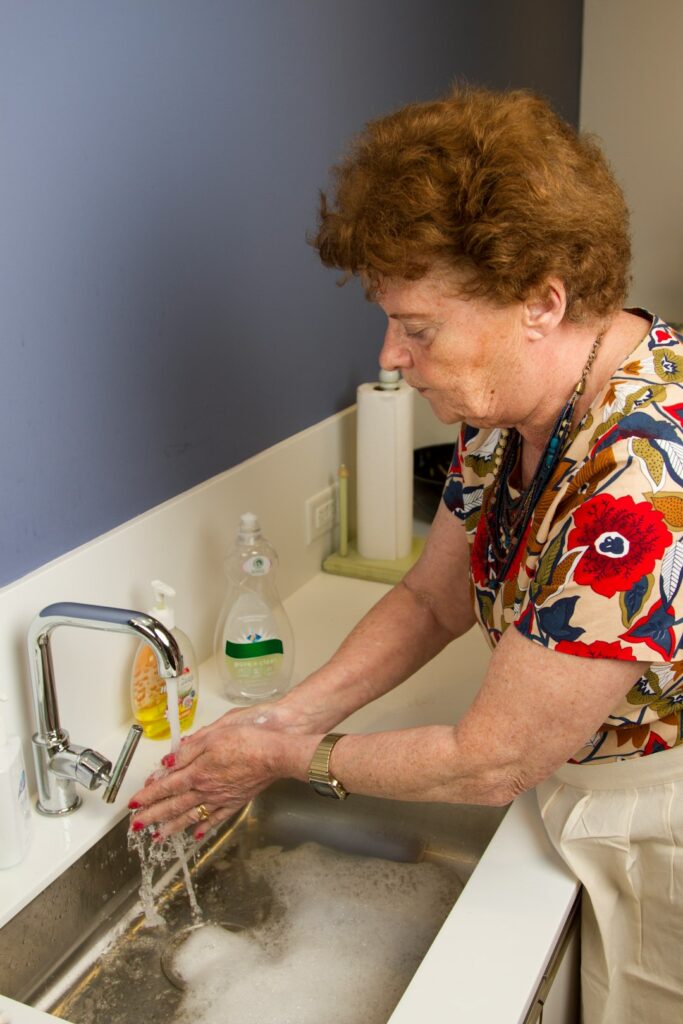
Hands should be cleaned before and after resident care, after contact with bodily fluids, after removing gloves, before meals, and after using the bathroom. Alcohol-based hand sanitizer is useful when hands are not visibly dirty. Soap and water are preferred when hands are visibly soiled or after certain gastrointestinal illnesses.
Other routine measures include:
- Covering coughs and sneezes and disposing of tissues promptly
- Cleaning frequently touched surfaces such as door handles, railings, light switches, phones, and shared equipment
- Using gloves, gowns, masks, or eye protection when the task creates a risk of exposure
- Keeping wound-care supplies and medication equipment specific to the individual resident
- Reprocessing reusable equipment according to established instructions
- Handling food at safe temperatures and preventing cross-contamination
- Encouraging staff members and visitors to stay home when they are ill
A common misconception is that gloves replace handwashing. Gloves can become contaminated during care and should be changed when moving between tasks or residents. Hands still need to be cleaned after gloves are removed.
What happens when a resident develops symptoms?
Early recognition matters because older adults may not show a high fever or typical symptoms. A new cough, sore throat, unusual tiredness, dizziness, weakness, confusion, reduced appetite, vomiting, diarrhea, or a sudden change in behavior can signal an infection.
Staff should assess the resident, document the change, notify the appropriate medical contact, and follow the residence’s infection-control plan. Depending on the suspected illness, the response may include testing, temporary separation from group activities, additional protective equipment, increased cleaning, or precautions for roommates and caregivers.
Families should report new symptoms before visiting. A person with respiratory symptoms may need to postpone a non-urgent visit or use additional precautions. This protects residents who may have chronic lung disease, weakened immunity, or other conditions that increase the risk of severe illness.
Restrictions should be reasonable, time-limited, and explained clearly. Infection prevention should not automatically mean complete isolation. Staff should look for safe ways to maintain social contact, meals, activities, and emotional support.
How are flu, COVID-19, and RSV handled?
Respiratory viruses can spread quickly in shared living environments, especially during colder months when people spend more time indoors. Prevention generally combines vaccination, symptom monitoring, ventilation, hand hygiene, cleaning, testing when appropriate, and temporary masking or distancing during periods of increased spread.
Residents and families can ask whether the residence:
- Helps residents stay current with recommended vaccinations
- Tracks symptoms among residents and staff
- Has access to timely testing when results would guide treatment or precautions
- Maintains supplies such as masks, gloves, sanitizer, and cleaning products
- Checks ventilation and indoor air circulation
- Has a plan for notifying families about an outbreak
- Allows sick staff members to remain home under appropriate work restrictions

A residence may use more protective measures during a cluster of illness, including masking in shared areas, limiting some group activities, increasing ventilation, or monitoring exposed residents. These steps should be based on the suspected infection and current public-health guidance rather than applied without explanation.
Seasonal conditions can add practical challenges for households in the area. Cold weather may reduce ventilation if windows remain closed, while snow, ice, and power interruptions can affect transportation, medication access, heating, and emergency staffing. A strong emergency plan addresses both infection risks and basic continuity of care.
What safety issues are easy to overlook?
Infection prevention includes more than respiratory viruses. Several overlooked risks deserve attention.
Medication equipment must not be shared when doing so could transmit bloodborne infections. Items used for blood glucose monitoring, injections, or other procedures should be assigned, cleaned, or discarded according to safe-use rules.
Bathrooms, dining areas, laundry rooms, and activity spaces require regular attention because they are shared by many people. Mold, spoiled food, pests, strong odors, visible bodily fluids, or persistently unclean surfaces should be treated as sanitation concerns rather than minor housekeeping issues.
Residents with dementia or mobility limitations may not be able to report symptoms clearly. Staff should watch for changes in eating, sleeping, walking, continence, alertness, or mood. Falls can also be linked to illness, dehydration, medication effects, or weakness and should receive prompt assessment.
Visitors should follow posted precautions, clean their hands, avoid bringing sick children or adults into the residence, and tell staff if they develop symptoms soon after a visit.
What questions should residents and families ask?
A short conversation can reveal whether safety practices are active and understandable. Useful questions include:
- How are residents and families notified about infectious illnesses?
- What symptoms cause staff to increase monitoring or testing?
- How are shared rooms handled when one resident becomes ill?
- How often are high-touch surfaces and shared equipment cleaned?
- What protective equipment is available during an outbreak?
- How are staff trained in hand hygiene, universal precautions, and infection symptoms?
- What is the plan for power outages, severe winter weather, or water interruptions?
- How are meals, medications, activities, and medical transportation maintained during an outbreak?
- How can a resident report an unsafe condition or a concern about cleanliness?
Residents should receive clear answers without being made to feel difficult for asking. Safety depends on communication among residents, families, caregivers, administrators, and medical providers.
When should a concern be reported?
A concern should be reported promptly if a resident has trouble breathing, sudden confusion, severe weakness, signs of dehydration, uncontrolled bleeding, a serious fall, chest pain, or rapidly worsening symptoms. Emergency symptoms require immediate emergency medical attention.
Less urgent concerns—such as repeated failure to clean shared equipment, missing hand sanitizer, unclear outbreak notices, unsafe food handling, or poor communication about a change in condition—should be documented and raised through the residence’s complaint process. Families may also ask how concerns are recorded, investigated, and resolved.
Effective infection prevention is visible in daily routines: clean hands, clean equipment, safe food, appropriate protective measures, early attention to symptoms, and honest communication. Those practices help assisted living remain a safe home rather than simply a place where illness is managed after it spreads.
