
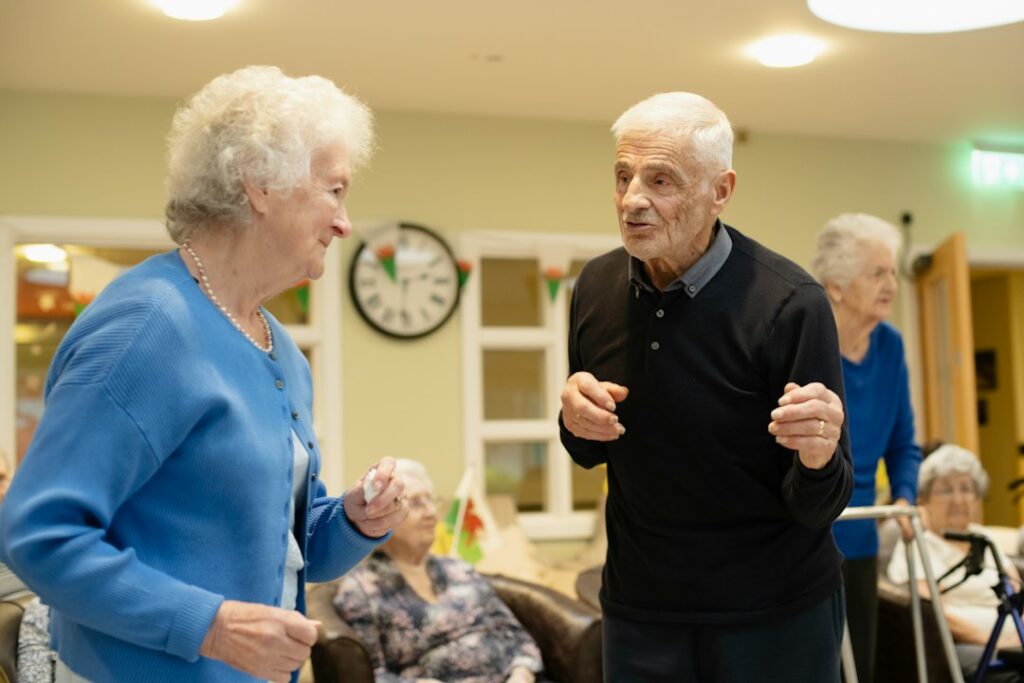
Assisted living can promote senior mobility by combining safe surroundings, regular movement, personal support, and attention to changing health needs. The goal is not simply to help residents get from one room to another. It is to help them remain as active, independent, and confident as their abilities allow.
For residents and families in Steelton, PA, mobility may include walking to meals, getting in and out of a chair, using a walker safely, taking part in activities, or moving through outdoor areas during changing weather. Assisted living is most helpful when these everyday movements are supported without taking away more independence than necessary.
How does assisted living help older adults stay mobile?
Assisted living supports mobility by making movement part of the daily routine. Residents may walk to dining areas, activity rooms, common spaces, gardens, or outdoor seating rather than remaining in a bedroom for most of the day.
Staff may provide reminders, supervision, or hands-on assistance based on an individual’s needs. A resident who can walk independently but becomes unsteady when tired may need occasional monitoring. Another resident may need help standing, transferring, or using a mobility device.
This approach is different from doing every task for a resident. Too much assistance can lead to less movement and loss of strength. Appropriate assistance encourages residents to do the parts of an activity they can safely manage.
What types of movement are encouraged?
A well-rounded mobility routine usually includes walking, strength-building, balance practice, and flexibility. These activities support different parts of everyday function.
Examples may include:
- Walking through hallways or shared spaces
- Repeatedly standing up from a chair and sitting down
- Gentle leg and arm exercises
- Stretching for flexibility
- Seated exercises for residents who cannot stand safely
- Balance activities performed with appropriate support
- Recreational movement such as dancing, gardening, or group exercise
Residents do not need to perform strenuous workouts to benefit. Short periods of movement spread throughout the day can be more realistic and comfortable than a single demanding exercise session.
Activities should be adjusted for arthritis, stroke-related weakness, Parkinson’s disease, heart or lung conditions, vision changes, or other health concerns. A resident’s care plan should reflect current abilities rather than relying on a one-size-fits-all routine.
How do assisted living communities reduce fall risks?
Fall prevention is closely connected to mobility. Residents are more likely to remain active when they feel secure and when common hazards are addressed.
Helpful safety features may include clear walking paths, adequate lighting, handrails, nonslip flooring, accessible bathrooms, and seating placed along longer routes. Furniture should be arranged so residents can move around it without twisting or reaching awkwardly.
Staff may also watch for changes such as:
- New difficulty rising from a chair
- Shuffling, leaning, or frequent loss of balance
- Increased dependence on a walker or cane
- Dizziness during transfers
- Fatigue after short walks
- Fear of walking after a previous fall
A fall does not always cause an obvious injury. A resident may become less active afterward because of fear, soreness, or embarrassment. Prompt attention can help prevent a temporary setback from becoming a long-term decline.
Why are care plans important for mobility?
Mobility needs can change quickly after an illness, medication change, hospitalization, injury, or worsening arthritis. Assisted living assessments generally consider how a resident moves, transfers, uses mobility equipment, and manages daily tasks.
A care plan may describe whether a resident needs:
- Standby supervision
- A steadying hand during transfers
- Assistance with bathing or dressing
- Help using a walker or wheelchair
- Reminders to wear proper footwear
- More frequent rest periods
- Observation after a change in walking ability

The plan should be reviewed when there is a significant change. For example, a resident who begins having difficulty after a fall may need a different level of support. A resident recovering from surgery may temporarily need more assistance and later regain some independence.
Families can help by reporting changes that may not appear during a brief visit, such as reluctance to walk, holding onto furniture, or avoiding activities that were previously enjoyable.
Can assisted living help residents use walkers and wheelchairs safely?
Yes, assisted living can support the safe use of walkers, canes, wheelchairs, and other mobility devices. Staff may remind residents to use the device consistently, keep pathways clear, and position equipment correctly before standing or sitting.
However, a mobility device must match the resident’s physical needs. A walker set at the wrong height, a wheelchair with poorly positioned footrests, or a cane used on the wrong side can make movement more difficult.
Residents should not be encouraged to abandon a device simply to appear more independent. The safer goal is to use the least restrictive support that allows reliable movement. Some residents may use a wheelchair for longer distances while still walking short distances with supervision.
What role do activities and social connections play?
Social opportunities can motivate residents to move more often. A person may be more willing to walk to a group activity, attend a shared meal, or visit with neighbors than to exercise alone.
Regular participation can also support confidence. Residents who successfully move through familiar spaces may become less fearful about walking. Conversation and group activities may reduce the isolation that sometimes follows a decline in physical ability.
Daily routines matter as well. Getting dressed, walking to meals, carrying a light personal item, or helping with a simple activity can provide functional movement without feeling like formal exercise.
How do local seasons affect senior mobility?
In Steelton, seasonal conditions can affect safe movement outside and around residential settings. Cold temperatures, wet pavement, snow, ice, and reduced daylight may make outdoor walking more difficult. Hot or humid weather can also contribute to fatigue and dehydration.
During challenging conditions, indoor walking routes and seated exercise can help residents remain active. Appropriate footwear, well-maintained entrances, good lighting, and extra time for transitions are especially useful during seasonal changes.
Residents should not feel pressured to walk outdoors when surfaces are slippery or visibility is poor. Maintaining mobility includes choosing safer alternatives when conditions change.
What should families ask about mobility support?
Families comparing assisted living options may want clear answers to practical questions:
- How are mobility needs assessed before and after move-in?
- What happens if a resident has a fall or sudden change in walking ability?
- Are exercise or movement activities offered regularly?
- How are walkers, canes, and wheelchairs accommodated?
- Are there indoor walking areas for poor weather?
- How are care plans updated after illness or injury?
- What types of assistance are available for transfers and bathing?
- How are residents encouraged to remain active without being rushed?
Assisted living cannot prevent every fall or preserve every resident’s abilities indefinitely. Its value lies in creating consistent opportunities for safe movement, recognizing changes early, and supporting independence at an appropriate level. For older adults, mobility is not only about walking distance. It also includes confidence, participation, strength, balance, and the ability to keep taking part in daily life.
